
BESTCARE BUILD · AUCKLAND OUTDOOR LIVING
Residential Outdoor Building in Auckland
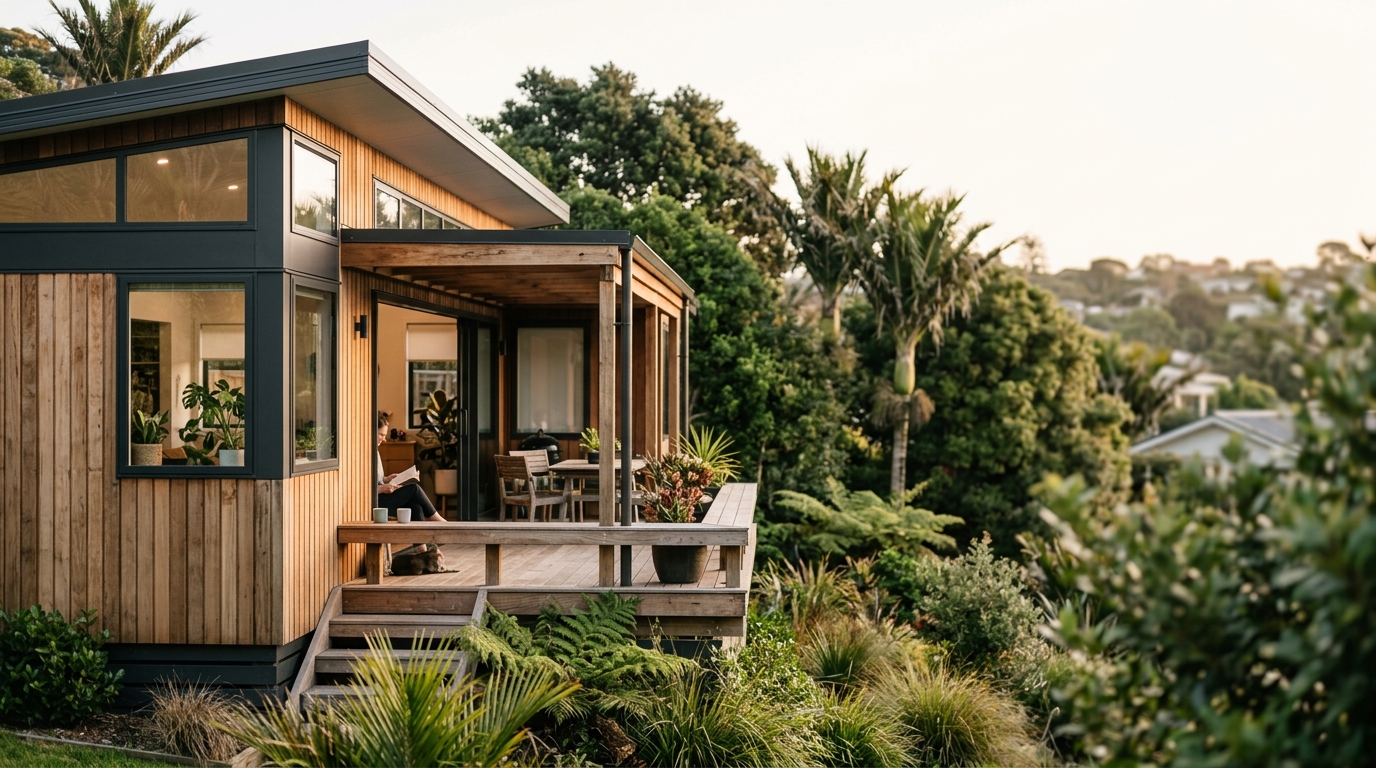
Decking: Materials, Cost & Durability for Auckland Homes
Choosing the right decking material shapes how your outdoor space looks, performs and ages in Auckland's variable climate. Timber remains the most popular choice, with treated pine offering an affordable entry point and hardwoods like Kwila delivering premium durability. Composite decking has grown significantly in recent years, appealing to homeowners who value low maintenance and consistent appearance over decades.
Treated pine is the most budget-friendly option, typically costing between $400 and $700 per square metre installed. It requires regular maintenance—oiling or staining every 12 to 18 months—to protect against moisture and UV damage. With proper care, a pine deck can last 15 to 20 years, making it practical for families planning to upgrade within that timeframe.
Kwila and other hardwood species sit at the premium end, often exceeding $900 per square metre. These dense timbers resist rot, insect damage and weathering far better than softwoods. Kwila's rich, warm tones deepen with age, and the material can last 30 years or more with minimal intervention. Hardwood decking suits properties where longevity and visual impact justify the higher initial investment.
Composite decking combines recycled wood fibres and polymer resins into boards that resist moisture, fading and splintering. Upfront costs typically start around $900 per square metre, but the material requires virtually no maintenance beyond occasional washing. Composite performs exceptionally well in shaded or damp areas where timber might develop mould or rot, and it maintains its colour and texture for decades.
Auckland's climate—mild winters, humid summers and frequent rain—demands materials that handle moisture without warping or degrading. Timber decks need adequate airflow underneath and proper drainage to prevent water pooling, which accelerates decay. Slope, sun exposure and proximity to trees all influence material choice; a deck in full sun might suit hardwood's natural UV resistance, while a shaded courtyard deck benefits from composite's mould resistance.
Standard pine deck projects typically start from $8,000 for smaller areas, with hardwood and composite builds beginning around $15,000 depending on size, access and design complexity. Our deck area calculator helps estimate material quantities and budget ranges for your specific project.
Pergolas & Louvered Roofs: Design & Year-Round Comfort
A well-designed pergola extends your living space outdoors, creating a defined area for dining, entertaining or simply relaxing. Traditional fixed-roof pergolas provide consistent shade and shelter, while modern louvered systems offer adjustable control over sunlight, airflow and weather protection. This flexibility transforms how Auckland families use their outdoor spaces across seasons.
Louvered pergolas feature adjustable slats that tilt open to welcome sunlight or close to create cooling shade as the sun moves throughout the day. When closed, the interlocking louvers divert light rain, keeping the space beneath dry enough for comfortable use. Motorised systems allow you to adjust the roof with a remote or smartphone app, responding instantly to changing conditions. This level of control makes outdoor spaces genuinely usable year-round.
Fixed-roof pergolas suit homeowners seeking permanent shelter and a more traditional aesthetic. Polycarbonate or metal roofing provides full weather protection, creating an outdoor room that functions almost like an extension of the house. These structures work particularly well when positioned adjacent to living areas. Fixed roofs also support integrated lighting, heating and even outdoor kitchens.
Design considerations start with orientation and purpose. A north-facing pergola captures maximum sunlight during winter while benefiting from adjustable shade in summer. East-facing structures provide morning sun for breakfast areas, while west-facing pergolas need robust shade solutions to handle harsh afternoon light. The pergola's size and proportions should relate to both your outdoor area and the house itself.
Powder-coated aluminium frames resist Auckland's humidity and salt air without rusting, typically lasting 40 years or more with minimal maintenance. Timber frames offer warmth and traditional character but require regular treatment to prevent weathering. Residential louvered roof systems combine aluminium frames with engineered louver mechanisms, delivering durability and functionality in a single package.
Finished outdoor living areas rank among the top features buyers look for when viewing properties, and outdoor improvements typically return 50 to 80 percent of their cost at resale. For families planning to stay in their homes long-term, the daily lifestyle benefits matter even more—a well-designed pergola changes how you experience your property.
Fencing & Retaining Walls: Practical Solutions for Your Property
Fencing and retaining walls solve practical problems while shaping how your property looks and functions. Good fencing provides privacy, security and boundary definition, while retaining walls manage slopes, prevent erosion and create usable flat areas on challenging sites.
Timber fencing remains popular for its natural appearance and versatility. Treated pine offers an economical option for boundary fences, typically lasting 15 to 20 years with regular maintenance. Hardwood fencing costs more but delivers superior durability and a premium finish that ages gracefully.
Aluminium fencing has gained significant market share due to its low maintenance requirements and clean, modern appearance. Powder-coated aluminium slat fencing delivers a contemporary look that lasts 40 years or more without rusting, warping or requiring repainting. The material suits coastal properties where salt air accelerates corrosion of steel and degradation of timber.
Retaining walls address the practical challenge of sloped sections, which are common across Auckland's volcanic terrain. Timber retaining walls effectively manage slopes and prevent soil erosion, creating terraced areas that maximise usable outdoor space. Properly engineered timber walls can last 20 to 30 years, particularly when built with treated hardwood and adequate drainage.
Concrete block and poured concrete retaining walls suit larger height differences and heavy-duty applications. These permanent structures handle significant soil loads and provide the structural integrity needed for driveways, basement excavations and major level changes. While more expensive than timber solutions, concrete retaining walls require virtually no maintenance and can last 50 years or more.
Drainage is critical for both fencing and retaining walls in Auckland's wet climate. Retaining walls need proper drainage systems behind them to prevent water pressure building up and destabilising the structure. Poor drainage is the leading cause of premature failure in both fences and retaining walls.
Our fencing and retaining wall services address the full range of residential needs, from boundary fences and privacy screens to engineered retaining solutions for challenging sites.
Planning Your Project: Council Consents, Timing & Budget
Successful residential outdoor building projects start with thorough planning, realistic budgets and understanding Auckland Council's requirements.
Council consent requirements depend on your project's size, height and proximity to boundaries. Decks under 1.5 metres high and more than 1 metre from boundaries typically don't require building consent, though you should always verify your specific situation with council. Larger decks, those attached to the house or built on challenging sites often need consent. Pergola building consent in Auckland follows similar principles—smaller freestanding structures may be exempt, while larger or attached pergolas usually require approval.
Retaining walls over 1.5 metres high always require building consent, as do walls of any height that support buildings, driveways or significant loads. Fencing generally doesn't require consent unless it exceeds height limits or sits on a boundary where neighbours must be consulted.
Timing affects both cost and construction quality. Auckland's driest months—January through March—offer the most reliable building weather, though this peak season often means builders are busiest. April through June provides a good balance of reasonable weather and better availability. Winter building is possible but weather delays become more likely.
Budget planning should account for the full project scope, not just materials and labour. Site preparation, council consents, engineering reports, drainage solutions and finishing touches all add to the base construction cost. A realistic budget includes a 10 to 15 percent contingency for unexpected issues. Our deck building guide covers the planning process in detail.
Material lead times can affect scheduling, particularly for premium products or custom colours. Composite decking, louvered pergola systems and powder-coated aluminium fencing may require several weeks' notice, especially during busy periods.
Choosing the Right Builder: What to Look For
Selecting the right builder determines whether your residential outdoor building project delivers the quality, functionality and value you expect.
Experience with your specific project type matters significantly. A builder who specialises in Auckland deck building understands material behaviour in local conditions, knows which fixings resist Auckland's humidity and can design structures that complement New Zealand architecture. Similarly, pergola specialists familiar with louvered systems understand the engineering requirements and installation techniques that ensure smooth operation for years.
Local knowledge extends beyond just building skills. Experienced Auckland builders understand council requirements across different suburbs, know which areas have challenging soil conditions and can anticipate how coastal exposure or bush settings affect material choices.
Portfolio and references provide tangible evidence of a builder's capabilities. Ask to see completed projects similar to yours, ideally ones you can visit to assess quality firsthand. Speak with previous clients about their experience—not just the finished result but the builder's communication, problem-solving and how they handled unexpected issues.
Licensing, insurance and warranties protect your investment. All residential building work in New Zealand requires appropriate licensing, and builders should carry public liability insurance. Warranties should cover both materials and workmanship, typically for at least 12 months. Written contracts should clearly specify scope, timeline, payment schedule and what happens if problems arise.
Communication style affects the entire project experience. Builders who listen carefully to your needs, explain options clearly and provide detailed written quotes demonstrate professionalism that typically extends to their construction work. The initial consultation reveals a lot about how the builder operates.
Pricing should be detailed and transparent, breaking down materials, labour, consents and other costs rather than offering a single lump sum. The cheapest quote often signals cut corners or inferior materials. Comparing three detailed quotes from reputable builders gives you a realistic sense of market rates.
With over 15 years' experience building decks, pergolas, fencing and retaining walls across Auckland's key suburbs, we understand what makes outdoor projects successful. Every project starts with understanding your property's specific conditions, your lifestyle needs and your budget realities, then designing and building solutions that deliver lasting value.