
BESTCARE BUILD · AUCKLAND OUTDOOR LIVING
Pergola Installation Cost: Auckland Pricing Guide
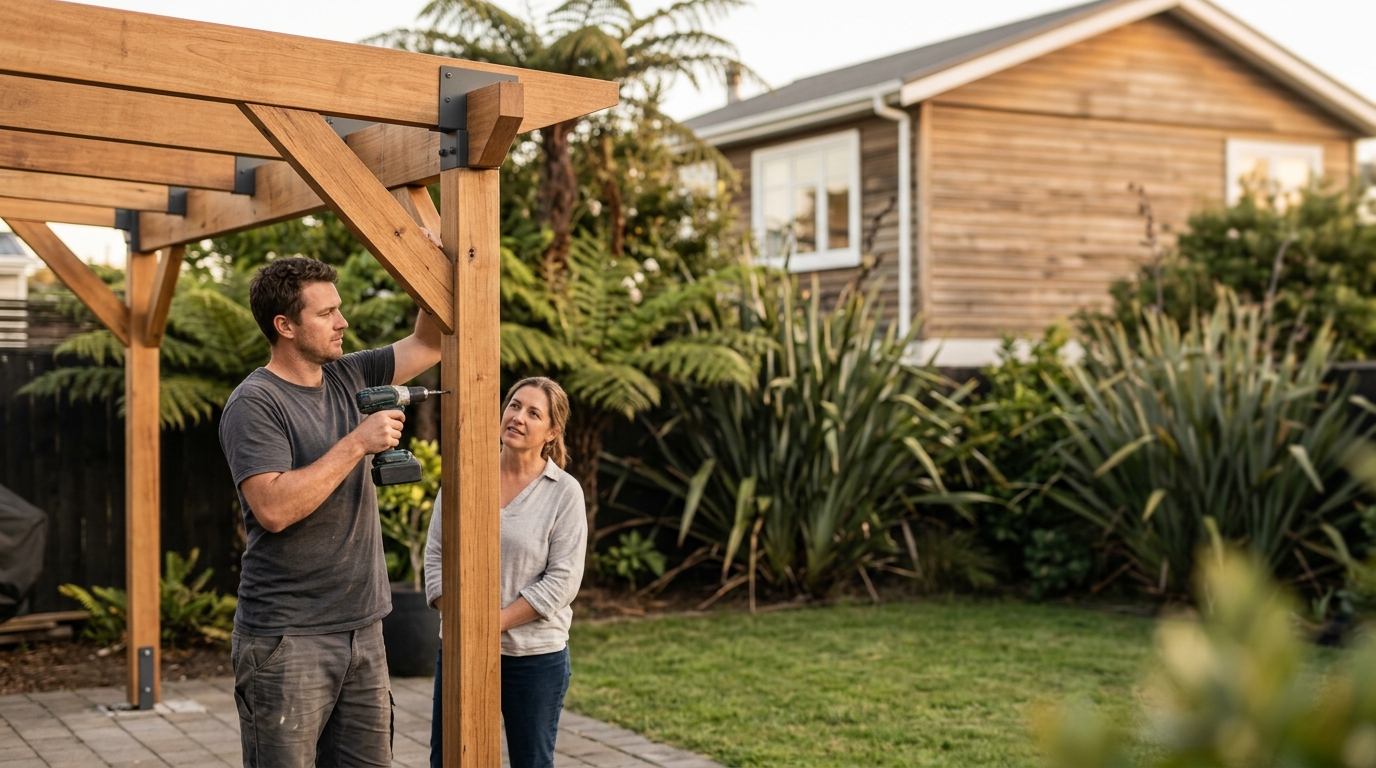
What Professional Pergola Installation Costs in Auckland
Professional pergola installation in Auckland typically follows international pricing patterns, with most homeowners investing between $4,000 and $12,000 for a complete project. The national average sits around $4,251 for a 100-square-foot structure, though Auckland's specific market conditions—including material availability, local labour rates and council requirements—can shift these figures.
For a standard 3×3 metre timber pergola, expect to pay $3,500 to $7,000 installed. A larger 4×5 metre structure will generally cost $6,000 to $12,000, depending on material choice and site complexity. These prices include materials, labour, concrete footings and basic finishing. Auckland contractors typically price projects between $20 and $60 per square foot when combining materials and labour, with the final figure reflecting your material selection, design complexity and site-specific challenges.
Labour generally accounts for roughly 20% of your total project cost, with materials making up the remaining 80%. This split means that choosing premium materials has a more significant impact on your budget than labour variations between contractors. Most Auckland pergola specialists charge $250 to $500 per hour for installation work, though many quote projects as a fixed price rather than hourly rates.
Site preparation costs vary considerably across Auckland's diverse terrain. Properties in established suburbs like Remuera or Herne Bay with level sections and good access typically require minimal preparation. Sloped sites in areas like Takapuna or Devonport may need additional foundation work, retaining elements or access solutions that add $800 to $2,500 to your project. Auckland Council building consent requirements also apply to most pergola installations, adding $150 to $500 in permit costs depending on your structure's size and complexity.
Material Options and Their Price Impact
Your material choice fundamentally shapes both upfront pergola installation cost and long-term value. Timber remains Auckland's most popular option, with Kwila (also called Merbau) leading for its natural durability in our humid climate. A Kwila pergola typically costs $5,000 to $10,000 for a standard 3×4 metre structure installed. This hardwood resists rot and insect damage without treatment, making it ideal for Auckland's coastal suburbs like Mission Bay or St Heliers where salt air accelerates deterioration in lesser materials.
Treated pine offers an economical entry point at $3,500 to $6,500 for comparable sizes. While requiring more maintenance than Kwila—regular staining or oiling every two to three years—treated pine performs well in Auckland conditions when properly maintained. Many homeowners in suburbs like Mount Albert or Epsom choose pine for budget-conscious projects, accepting the maintenance trade-off for lower initial investment.
Composite materials like Ecodeck and Futurewood have gained traction for their minimal maintenance requirements. These engineered options cost $6,500 to $12,000 installed for a standard pergola, positioning them between pine and premium hardwoods. Composites never need staining, won't splinter and resist Auckland's weather extremes without warping. They suit busy homeowners in areas like Ponsonby or Parnell who prioritise low maintenance over traditional timber aesthetics.
Aluminium pergolas represent the premium end of standard materials, typically costing $7,000 to $14,000 installed. Powder-coated aluminium frames offer exceptional durability, require virtually no maintenance and suit modern architectural styles common in suburbs like Herne Bay. The material's strength allows for longer spans and cleaner lines than timber, though it lacks the warmth many homeowners seek in outdoor living spaces.
Each material carries different lifecycle costs. Kwila requires minimal maintenance—perhaps annual cleaning and occasional oiling—over a 25-plus year lifespan. Pine needs biennial treatment but lasts 15 to 20 years with proper care. Composites and aluminium essentially eliminate maintenance while lasting 30-plus years, making their higher upfront cost more competitive when viewed across decades of ownership.
Louvered and Motorised Systems: Premium Costs Explained
Louvered pergola systems represent a significant step up in both functionality and pergola installation cost. Manual louvered systems typically cost $6,500 to $15,800 installed, while motorised versions range from $13,700 to over $30,000 for residential installations. These adjustable roof systems—available in Auckland through brands like Louvre Tech and Louvre Lounge—let you control sunlight, ventilation and weather protection by rotating aluminium blades from fully open to completely closed.
The price premium reflects sophisticated engineering. Louvered systems require precision manufacturing, weather-sealed blade pivots, integrated guttering and structural frames capable of handling wind loads when blades are closed. Manual systems use a hand crank or removable pole to adjust blade angles, keeping costs lower while delivering full functionality. Motorised versions add electric actuators, control systems and often smartphone integration, explaining their substantially higher price point.
For a typical 4×4 metre louvered pergola in Auckland, expect $12,000 to $18,000 for a manual system fully installed, or $18,000 to $28,000 for motorised operation. These figures include the complete system, installation, electrical work for motorised versions and building consent. Premium features like integrated LED lighting, rain sensors that automatically close blades or wind sensors add $1,500 to $4,000 to your project cost.
Motorised systems require electrical installation, adding $800 to $2,000 depending on your power source location and whether you want hardwired or solar-powered operation. Auckland electricians must complete this work to code, and it forms part of your building consent scope. Many homeowners in suburbs like Remuera or Devonport choose hardwired systems for reliability, while those adding pergolas to existing decks far from the house often prefer solar options to avoid trenching costs.
The functionality justifies the investment for many Auckland families. Louvered systems transform your pergola from a shade structure into a true outdoor room, usable year-round regardless of weather. You can open blades for summer breezes, close them for rain protection or angle them for optimal shade as the sun moves. This versatility particularly suits Auckland's variable weather, where conditions can shift from brilliant sunshine to sudden showers within hours.
Hidden Costs and Budget Planning
Beyond the quoted pergola installation cost, several additional expenses commonly catch homeowners unprepared. Foundation work represents the most significant potential addition. While simple concrete footings for a freestanding pergola on level ground cost $400 to $800, challenging sites require more. Sloped sections may need engineered foundations, adding $1,200 to $3,500. Properties with poor drainage or unstable soil—not uncommon in Auckland's clay-heavy areas—sometimes require deeper footings or additional structural work.
Building consent fees vary by project scope but typically run $350 to $650 for standard pergola installations in Auckland. Your contractor should handle the consent application, though some charge separately for this service. Factor in potential inspection fees if council requires multiple site visits during construction. Most straightforward projects need just a final inspection, but complex installations may require foundation inspections before proceeding.
Site access challenges can inflate costs in established Auckland suburbs where narrow driveways, steep sections or limited street parking complicate material delivery and equipment access. Properties in areas like Parnell or Herne Bay with restricted vehicle access may incur additional charges for hand-carrying materials or using smaller equipment. Discuss access with contractors during quoting—experienced builders will identify these issues early rather than surprising you with extra charges mid-project.
Electrical work for lighting, fans or motorised systems adds $500 to $2,500 depending on complexity and distance from your switchboard. Even if you're installing a standard pergola now, consider running conduit during construction if you might add lighting later. Retrofitting electrical after completion costs significantly more than including it initially. Many Auckland homeowners add outdoor power points during pergola installation, enabling future additions like outdoor heaters or entertainment systems.
Finishing touches often exceed initial budgets. Staining or painting timber adds $400 to $1,200 depending on size and product choice. Decorative elements like privacy screens, planter boxes or integrated seating can add $800 to $3,000. Landscaping around your new structure—whether simple garden beds or comprehensive hardscaping—represents another cost layer. Budget at least 10% above your quoted pergola installation cost for these finishing elements that transform a structure into a complete outdoor living space.
Choosing the Right Contractor and Getting Fair Quotes
Selecting your pergola installer matters as much as choosing materials or design. Start by verifying credentials—Auckland contractors should hold appropriate building licences, carry public liability insurance and demonstrate experience with pergola installations specifically. Ask to see recent projects similar to yours, preferably in your suburb where they'll understand local conditions and council requirements. A builder experienced with Auckland deck construction often brings valuable expertise to pergola projects, understanding how outdoor structures perform in our climate.
Request detailed written quotes from at least three contractors. Comprehensive quotes should itemise materials by type and quantity, specify labour costs, include foundation work and finishing, note permit fees and provide a clear timeline. Vague quotes listing only a total figure make comparison impossible and often hide assumptions that lead to disputes later. Quality contractors provide transparency because they're confident in their pricing and scope.
Compare quotes carefully, looking beyond the bottom line. The lowest price often signals corners cut—cheaper materials, less experienced installers or excluded work you'll need to arrange separately. The highest quote isn't automatically best either; it may reflect inefficiency rather than superior quality. Look for the middle ground where detailed scope, quality materials and fair pricing align. Ask each contractor to explain their quote, particularly any significant variations from competitors.
Check references thoroughly. Contact at least two previous clients, asking about timeline adherence, communication quality, site cleanliness and whether the final cost matched the quote. Drive past completed projects if possible—seeing finished work reveals craftsmanship quality better than photos. Online reviews provide useful signals, though focus on patterns across multiple reviews rather than individual complaints or praise.
Discuss warranties explicitly. Reputable Auckland pergola builders typically offer 12-month workmanship warranties covering installation defects, with material warranties varying by product. Timber might carry five to ten-year warranties against structural failure, while aluminium and composite systems often include 15 to 25-year manufacturer warranties. Understand what's covered, what's excluded and how warranty claims are handled. A contractor confident in their work will clearly explain warranty terms rather than minimising the discussion.
Timing affects both availability and sometimes pricing. Auckland's outdoor construction season peaks from October through March when weather favours building and homeowners prepare for summer entertaining. Booking during this period means competing for contractor availability, potentially facing longer waits or less negotiating flexibility. Scheduling installation during autumn or winter can sometimes yield better pricing and faster turnaround, though weather may extend timelines. Discuss seasonal considerations with contractors—experienced builders know when conditions suit different project types.
Payment terms should protect both parties. Avoid contractors demanding full payment upfront—this signals financial instability or worse. Standard practice involves a deposit (typically 10–20%) to secure your booking and order materials, a progress payment when installation begins and final payment upon completion and your satisfaction. Never make final payment until you've inspected the finished work, tested any motorised components and confirmed everything matches your agreement.
Building strong communication from the start prevents problems later. Clarify how the contractor handles changes, unexpected issues or weather delays. Establish who manages council inspections and how you'll be updated on progress. Discuss site access, working hours and how the team will protect your property during construction. These conversations reveal professionalism and help you gauge whether you'll work well together across your project's duration.
The right contractor brings more than installation skills—they offer design guidance, material expertise and problem-solving when site conditions surprise. They'll suggest solutions you haven't considered, warn you away from choices that won't suit your situation and deliver a structure that enhances your property for decades. This expertise justifies professional installation costs and explains why experienced builders' quotes often exceed less established competitors. You're not just buying labour; you're accessing knowledge that ensures your investment performs as intended.